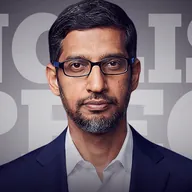
Prime Minister Modi and distinguished leaders, it's wonderful to be back in India. Every time I visit, I'm struck by the pace of change, and today is no different. Back when I was a student, I often took the Coromandel Express train from Chennai up to IIT Kharagpur.
To get there, we passed through Visakhapatnam, Vizag. I remember it being a quiet and modest coastal city brimming with potential. Now, in that same city, Google is establishing a full stack AI hub, part of our fifteen billion dollar infrastructure investment in India.
When finished, this hub will house gigawatt-scale compute and a new international subsea cable gateway, bringing jobs and cutting-edge AI to people and businesses across India. Sitting on that train, I never imagined Vizag becoming a global AI hub, just as I couldn't have imagined that one day I'd be spending time with teams figuring out how to put data centers into space or taking my parents for a fully autonomous car ride in San Francisco.
Seeing a Waymo ride through my eighty-three-year-old dad's eyes, I saw the progress in a whole new light. Of course, he said he'd be more impressed if it worked on India's busy roads. Still working on that one, Dad.
The progress shows what's possible when humanity dreams big, and no technology has me dreaming bigger than AI. It is the biggest platform shift of our lifetimes. We are on the cusp of hyper progress and new discoveries that can help emerging economies leapfrog legacy gaps.
But that outcome is neither guaranteed nor automatic. To build AI that is truly helpful for everyone, we must pursue it boldly, approach it responsibly, and work through this defining moment together. Why bold? Because AI can improve billions of lives and solve some of the hardest problems in science.
For fifty years, predicting protein structures was a grand challenge and a blind spot that stalled drug discovery. Demis Hassabis and his team at Google DeepMind asked an audacious question: How could we use AI to solve this? That question led to AlphaFold.
This breakthrough didn't just win a Nobel Prize, it compressed decades of research into a database that is now open to the world. Today, over three million researchers in more than one ninety countries are using it to develop malaria vaccines, fight antibiotic resistance, and much more. And we are asking similarly bold questions across the scientific stack, from cataloging DNA disease markers to building AI agents that act as true partners in the scientific method.
We must be equally bold in tackling problems in regions that have lacked access to technology. Take El Salvador, where Google has partnered with the government to bring affordable AI-powered diagnosis and treatment to thousands who could never afford to see a doctor. Or in India, where our work together is helping farmers protect their livelihoods in the face of monsoons.