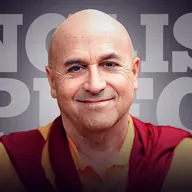
Host: What can we learn from, Buddhism and your own experience about, happiness? Matthieu Ricard: How to Well, I was thinking about, you know, since the panel was titled about pleasure, about the relation between the two. You know, people speak of magic moments, like walking in the snow under the stars with a wonderful person.
And then, so but sometimes it's this magic moment, there's nothing I can do about it. But if you think about why was it magic? At that time, there was a sense of having no inner conflicts, of feeling sort of it's spacious with the universe, with a, with a loved one, and so this kind of peace.
So it's not that magic, you can understand why it happened. So can, could we consider that as something like, a way of being that we could cultivate as a skill? Now to come back to pleasure, you come back from this walk in the snow under the stars, and you take a wonderful hot shower.
It's, it's bliss, pleasure. Now you stay 24 hours in that hot shower. It's, it's, it's not so interesting.
So pleasure is very much dependent upon time, circumstances. It's something that, uses itself as we consume it. And if it's, on top of that, you add craving or grasping, then somehow it dims the feeling of deep satisfaction.
Actually, you can enjoy something pleasurably, and in the brain you build up the wanting circuit, which is different, and at the end you may experience something that you want without feeling pleasure. That's called addiction. Host: So in a So just to understand. So you're trying to separate, happiness from pleasure, and you say pleasure is much more temporary Matthieu Ricard: Well, pleasure is, you look for pleasurable sensations.
And so those are very vulnerable, let's say, to outer circumstances. And basically if you are keeping on trying to renew that all the time, and this is the recipe for happiness, it looks more for a recipe for exhaustion than happiness. So let's take happiness now as a way of being.
So a way of being which is not just, happiness on its own, but a cluster of human qualities. That is, inner peace, inner strength, inner freedom. It is loving kindness, compassion, friendship, resilience, inner courage.
And those are things that the more you experience them, instead, rather than pleasure, the more actually they get deeper and stronger because it's, it builds up something. So in the end, you end up with inner resources to deal with the ups and downs of life no matter what happen, and the opposite of pleasure.
So it builds a platform in life on which you come back after winning the lottery, you come back or even go below. If it's a drama, you also come back to that platform. But you raise that platform as a skill.
So now it's also something that give you a sense of confidence that you can go through the ups and downs of life. So therefore you feel less vulnerable, you feel less threatened, you feel less protective. So you also naturally will open more to others.