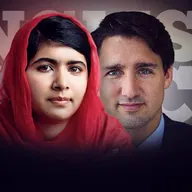
Orit Gadiesh: How do you move to actually change the social dialogue, among other things, around empowerment of women, for example, and not just education? Yeah, from Malala. Malala Yousafzai: Well, I think, we do want to see change, and for that, education is the only way that I see for women empowerment, and it's not the job of one person.
Everyone has to play a role in this, whether it's at government level or business level or NGO level or local activist level, and that is something that I have recognized right from the beginning.
And what I personally am doing through Malala Fund is I am empowering and reaching out to local advocates in Pakistan, in Nigeria, in Latin America, in India, and we are empowering them so that they can bring change in their local communities, whether it's teachers training, whether it's, bringing STEM skills, whether it's giving e-learning.
I'm also focusing on empowering girls because they are, they are the future, and giving them a voice so that they can speak out for their rights. They can try to speak out about the issues that they're facing. So I'm doing that.
But then also governments and presidents and prime ministers, they have a big role, in making sure that women, can have access to quality education. They can have access to opportunities, and I think some countries are leading in that, and they're stepping forward, especially Canada. Like, I'm really looking forward to G7 and and the steps that you'll be taking.
We'll be excited to hear about those. But I think it's everyone has to play their role. And I'm also, really, I think that business sector should, definitely invest in the education and empowerment of women, and this is, this is an investment on which the return is very high.
The return is high, the profits are high, and the opportunity cost is low. They. When you invest in a girl, you are contributing to that girl individually. She is, she's going to have a future, but you're also impact-impacting, the country, the nation.
You. It is helping in economic growth. It helps reduce poverty. It helps us tackling climate change.
So it helps us to reduce child labor, child trafficking, early child marriages. So the benefits and the advantages are countless. It is just reminding ourselves that we have to take a step, and that step is investment in education.
Donor countries, developing countries, business sector, governments, everyone has to come together and play their role. Justin Trudeau: On the, Global Partnership for Education, which is such an important initiative that, Malala, you're so involved in, I.
It's something that's really exciting, and actually, there's a bit of synchronicity to it for me because 16 years ago, at a then G8 meeting that Canada was chairing in Kananaskis in Canada, the idea that would become the Global Partnership for Education was actually launched. And what, you are doing and what the Global Partnership is doing around the world right now is so meaningful.
A few weeks from now in Senegal, there's going to be, an announcement of the replenishment of the Global Partnership for Education. And Canada is pleased to, announce that we're gonna be, pledging 180, million dollars, and we're actually doubling our yearly contribution to the Global Partnership for Education.