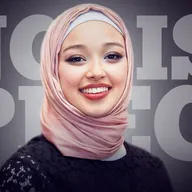
Good afternoon, everybody. Marhaba. It is a pleasure to be here and share some reflections with you today. Today is a special day for many reasons, but it is extra special for me, as some of you may know, because my father, who is a Syrian passport holder, could not make it to my 2018 college graduation or my white coat ceremony.
But thankfully, he is here today. He's here alongside my incredible mother, my brother, the best of lifelong friends and classmates, and I'm so grateful. It is an honor to be a part of this day with all the families and parents here, physically, virtually, and in spirit.
Collectively celebrating our, and truly your, incredible milestone and significant achievements. A culmination of over 10, even 25 years of your guidance, support, patience, and encouragement. We thank you. During my time at HMS, I took a research year to work on an immigrant women's health project.
And through many focus group discussions, the concept of identity, the strength and empowerment it brings, was so palpable. I reflected on what cultural and religious identity meant to me, how it empowers me, and intersects with my identity as, dare I say now, a physician. After nine years in the US and on Harvard's campus, every time I see someone from my home region, the first question I get is, "How are you treated there?
Do you face any challenges because of your headscarf or because you're Arab?" Thought-provoking questions like this did not only come from those far away. During PCE, a clerkship director was checking in with me about my experience with patients and faculty, asking me the same question.
Later, during my residency interview trail, noting that my personal statement and extracurricular activities were all relevant to my identity as an Arab Muslim woman, an interviewer asked me, "What make you feel. What made you feel like you can so openly and unapologetically be yourself?" It can be hard to quiet the noise as a busy medical student and reflect on your own identity, but I owe that reflection to myself and to those asking.
The question prompted me to wonder about the weight of wearing my identity. Is it burdensome to me? Inconvenient to others? The answer was never simple or concrete.
It was always so undeniably complex. A composite of experiences, memories, stories, and internalized perspectives. Never simple, much like identities.
I thought back to an experience I had at the Harvard Square homeless shelter, where I was doing intake with a guest who was getting an overnight bed, an experience much similar to doing a new admission for a patient. Next morning, he shared that someone on his Facebook feed had made an Islamophobic post. But this time, he took it upon himself to comment saying, "You don't know what you're talking about.