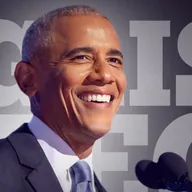
Heather Cox Richardson: Thank you all for coming tonight. Shall we dive into it? Barack Obama: Let's, let's go. Heather Cox Richardson: All right.
Barack Obama: Let's, let's, let's talk. So let'Let's chop it up, as they say. Heather Cox Richardson: So let's start off the top.
You are both a historic figure and a historical Mm. In one of the most fraught times in American history. Mm. And in your book A Promised Land, you wrote about the conflict between working for change within the system and pushing against it, wanting to lead, but wanting to empower people to make change for themselves, wanting to be in politics, but not of it.
What did that mean for you in your early career, and how has it changed? How did it change when you were president, and what how do you think about that now that you're out of office? Barack Obama: Well, I've talked about this publicly before.
I was not someone, who as a young person said, "I wanna be president." I wanted to be a basketball player. You know, architect.
There were a bunch of different things. Politician was not on the list. The way I came into it, I was inspired, by social movements.
I was inspired by, in particular, the civil rights movement, that I had been too young to participate in. My role models were people like Bob Moses and Diane Nash and the Freedom Riders. And then, you know, after I'd started community organizing and then went back to law school, this is a moment when, solidarity is rising in Poland, right?
And then the Berlin Wall is coming down, and Tiananmen Square is happening, and the people's the people power in the Philippines. And and so you're seeing, a sense of ordinary people rising up and taking control of their lives, and overthrowing oppressive structures and systems. And so that's what excited me.
But what I also recognized, from studying with smart professors like you and doing a little reading, By the way, for young people here, reading. It's, it's outstanding.
It, you know. Cat videos and and TikTok's great, but every once in a while, picking up a book. What you came to recognize is that, the success of the Voting Rights Act or the Civil Rights Act was first and foremost the courage and tenacity of generations of freedom fighters and the civil rights movement and Dr. King.