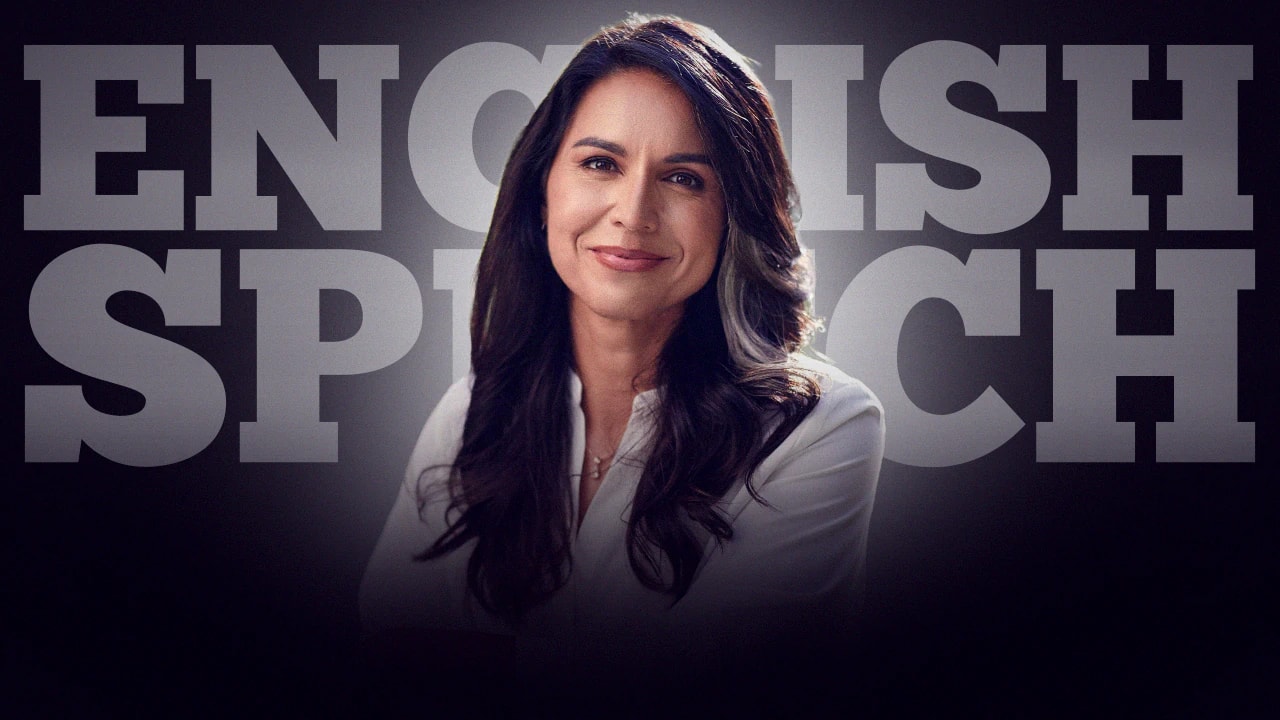
US & India for a Peaceful Future
Thank you so much, Samir, for your kind introduction. I wanna thank all of you for making the time to come, and join us this morning as we kick off, this day of critical and constructive dialogue. It's great for me to be back here, in India.
It's been too long, but it's always such a wonderful and warm experience, knowing the rich history of this country and the vibrant democracy that really serves as the foundation for the special bond that has long existed between our two countries. I wanted to start our conversation today by greeting you with aloha and namaste, because contrary to popular belief, these words are not just greetings.
They actually both have a very deep spiritual, powerful meaning that, for me personally, have been at the core, and heart of my life and are what I hope will inspire meaningful dialogue and conversations here at Raisina. When we greet each other with aloha and namaste, what it really means is I'm coming to you and greeting you with respect.
It is a recognition of the eternal divine spirit that exists within each of our hearts, and it's a reminder that we are all connected, that we are all children of God, regardless of our race or religion, ethnicity, politics, our background, where we come from, our status in society.
By greeting us in this manner, we are opening the door to have a much more meaningful and deeper exchange that gets past the divisiveness and the partisanship that too often poisons, the conversations that we have. It's a critical reminder that what we share in common is far more powerful than that which sets us apart.
It's great to be back here in India, and I especially wanna thank Prime Minister Modi for the invitation, to come here to get together with new friends, to greet old friends here from across the Indo-Pacific region and from around the world.
I leave right after our dialogue here to head back to Washington, D.C. But it's been a constructive few days where I've been engaging with our Indian counterparts, working to continue to build off of the momentum that was created by President Trump and Prime Minister Modi's joint statement, in, issued in Washington, D.C. After their Oval Office meeting.
The partnership between our two countries has been strong for decades, and under the leadership of Trump and Prime Minister Modi, and rooted in our shared values of peace and freedom, security and prosperity, I'm confident that this partnership and friendship between our two nations and our leaders will continue to grow and strengthen.
I'm grateful to be here with all of you because these gatherings are so important, because they give us the opportunity to come together and actually engage in direct dialogue and conversation around some of the most timely and pressing issues that face us all. The theme of this conference couldn't be better: people, peace, and planet, highlighting these fundamental aspirations that unite us. It's the foundation that prosperity, security, and freedom rest.
If we are not at peace, we cannot be truly prosperous, secure, or free. And so today, our actions, our dialogue, the reaffirmation of our commitments to these principles, to one another and our partnerships, and our shared vision for the future provide us with the opportunity to build more meaningful relationships and work together as we leave this conference towards the interests of the people to protect our planet and to further the cause of peace.
I'm a child of the Pacific. I was born and raised first born in American Samoa, raised in Hawaii. I've spent a lot of time throughout my life traveling throughout the Indo-Pacific and working in many different countries.
So I'm very familiar with the rich and beautiful cultures, the kindness and hospitality that I've experienced everywhere I've gone, and the rich history within each country that leads to a better understanding of the nuance and complexities that exist within these countries, but also within the relationships in the region. It's a vast and critical region that's not just a geographic space. It is the geopolitical center of gravity for the 21st century.
So ensuring peace and stability here is essential to our collective security, our objective of economic prosperity, and our ability to work together to take a. To take on the great challenges of our time, and we must tackle these challenges together. Our ability to do so as nations, as leaders, as people, is critical towards achieving our collective goals.
Unfortunately, we live in a time where war and conflict is being waged on many fronts around the world. The Bulletin of Atomic Scientists, founded in 1945 by by Albert Einstein and Oppenheimer, has declared the Doomsday Clock to be eighty-nine seconds to midnight, closer to the brink of nuclear catastrophe than ever before. So your focus, again, on peace, people, and planet is timely.
It is times like this that call on leaders to stand up for these interests that affect us all and will affect generations who will follow. Unfortunately, as we've seen throughout history, simply calling for peace too often invokes attacks and smears. Now, these goals cannot be achieved by any one person or one nation alone.
Our ability to make progress toward a peaceful, secure, free, and prosperous society must be done together, and it begins with us. I wanna share with you a few excerpts from one of the most powerful speeches that I've heard in my life that was delivered by President John F. Kennedy at American University in 1963 on this topic of peace.
He said, quote, "First, we must examine our attitude toward peace itself. Too many of us think it is impossible. Too many think it is unreal, but that is a dangerous defeatist belief.
It leads to the conclusion that war is inevitable, that mankind is doomed, that we are gripped by forces that we cannot control. We need not accept that view. Our problems are man-made, therefore they can be solved by man."
President Kennedy goes on to say, "Man's reason and spirit have often solved the seemingly unsolvable, and we believe they can do it again." He says, "I'm not referring to the absolute infinite concept of peace and goodwill of which some fantasies and fanatics dream. Let us focus instead on a more practical and attainable peace based on a series of concrete actions and effective agreements which are in the interest of all concerned.
There is no single simple key to this peace, no grand or magic formula to be adopted by one or two powers. Genuine peace must be the product of many nations, the sum of many acts. It must be dynamic, not static, changing to meet the challenge of each new generation.
With such a peace, there will still be quarrels and conflicting interests as there are within families and nations. World peace, like community peace, does not require that each man love his neighbor. It requires only that they live together in mutual tolerance, submitting their disputes to a just and peaceful settlement."
He closed by saying, "So let us persevere. Peace need not be impracticable, and war need not be inevitable. By defining our goal more clearly, by making it seem more manageable and less remote, we can help all people to see it, to draw hope from it, and to move irresistibly toward it."
These powerful words were as powerful and true and relevant then in 1963 as they are today. In the United States, President Trump remains unwavering in his commitment to achieving peace through a strategy rooted in realism and pragmatism. Securing peace through strength, which he speaks of very often, requires strong leadership with a clear-eyed and realistic understanding of the global challenges that exist as well as the opportunities.
It requires a commitment to fostering cultural and economic ties that reduce the likelihood of an escalation to conflict and a dedication towards reinforcing our mutual interests. It requires leaders have the courage to engage directly with both friends and adversaries alike, to increase understanding, to resolve differences, and to work to prevent an escalation to conflict.
It requires leaders who are not afraid to speak an inconvenient or unpopular truth, and who ask the tough questions, who challenge the established view or quote unquote, "The way things have always been done," to spark what may be hard but necessary conversations about the realities we face and the best way forward to advance our mutual cause of peace, freedom, security, and prosperity.
So just as President Trump is committed to America first, putting the safety, security, and freedom of the American people at the forefront of his policies and his decisions, Prime Minister Modi is committed to India first. Prime Minister Luxon is committed to New Zealand first. This is the expectation of any leader's commitment to their people, to serve them, to put their interests at the forefront of their decisions.
But this should not be misunderstood to mean that America first is America alone.
The relationships that we build together are critical to advance our mutual interests, and it's why gatherings like this here at RICE and are so important, because it brings us together here, people from over 120 countries around the world, providing us a platform where heads of state, ministers, directors, leaders in business and nonprofits and strategic think tanks can actually come together in that spirit of aloha for robust dialogue and debate that will help us increase our understanding of one another.
It is our shared values that will continue to shape the future of our partnerships and the world. And while we represent our own sovereign nations with unique perspectives and unique interests, by working together honestly, transparently, and strategically, we can ensure a more peaceful, free, secure, and prosperous future for our people and the world. Thank you so much.
Aloha. Jai Shri Krishna.